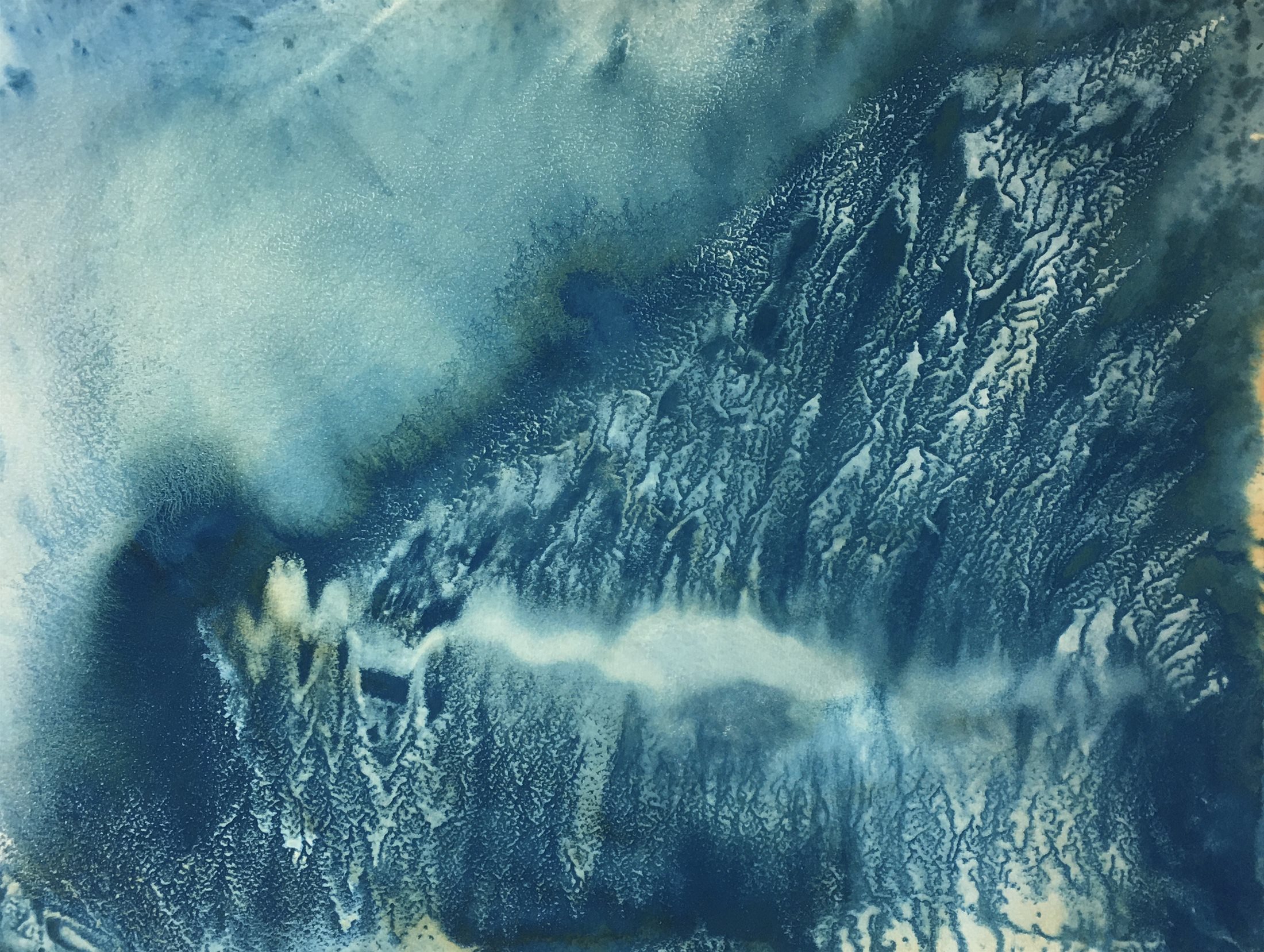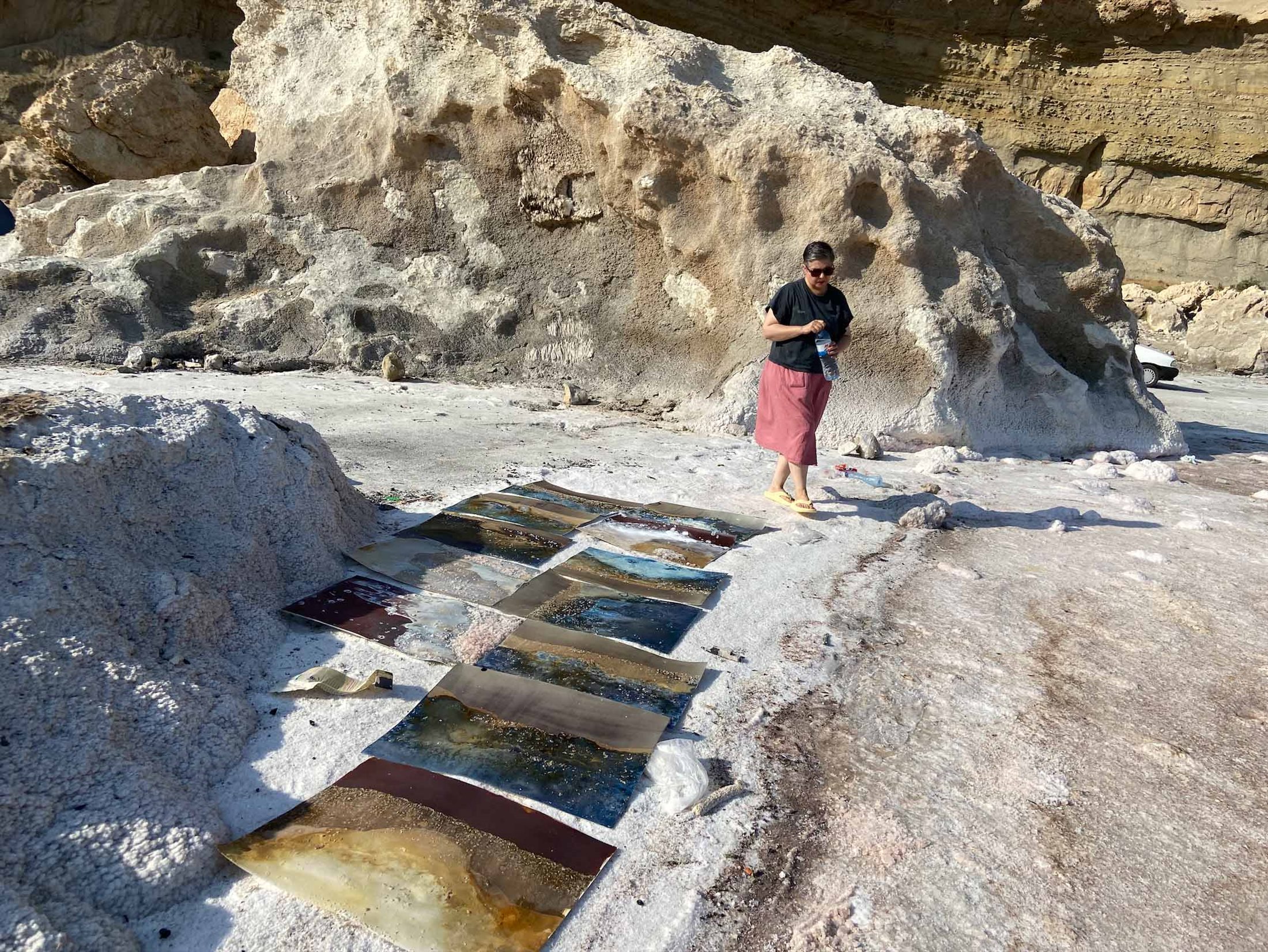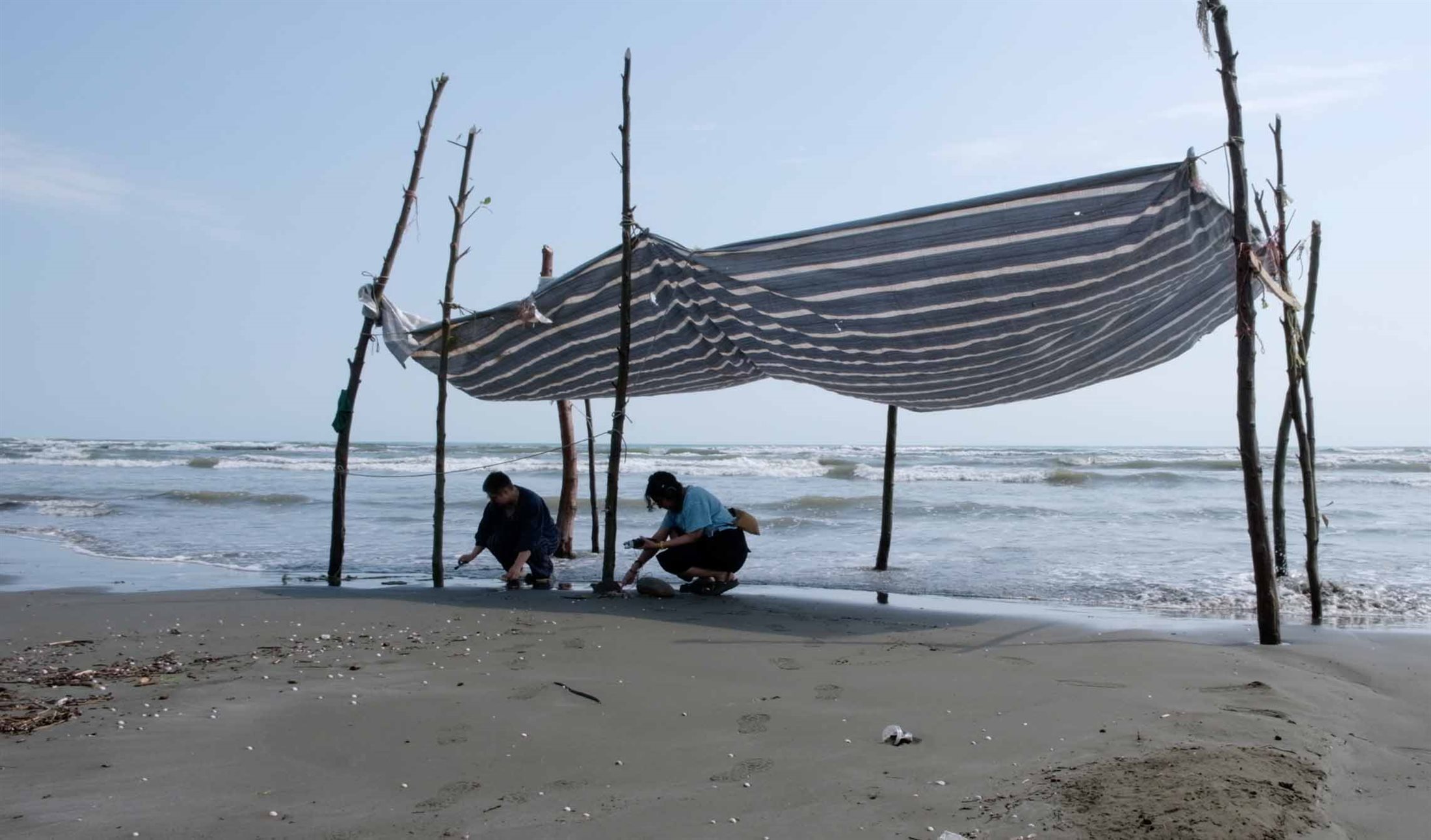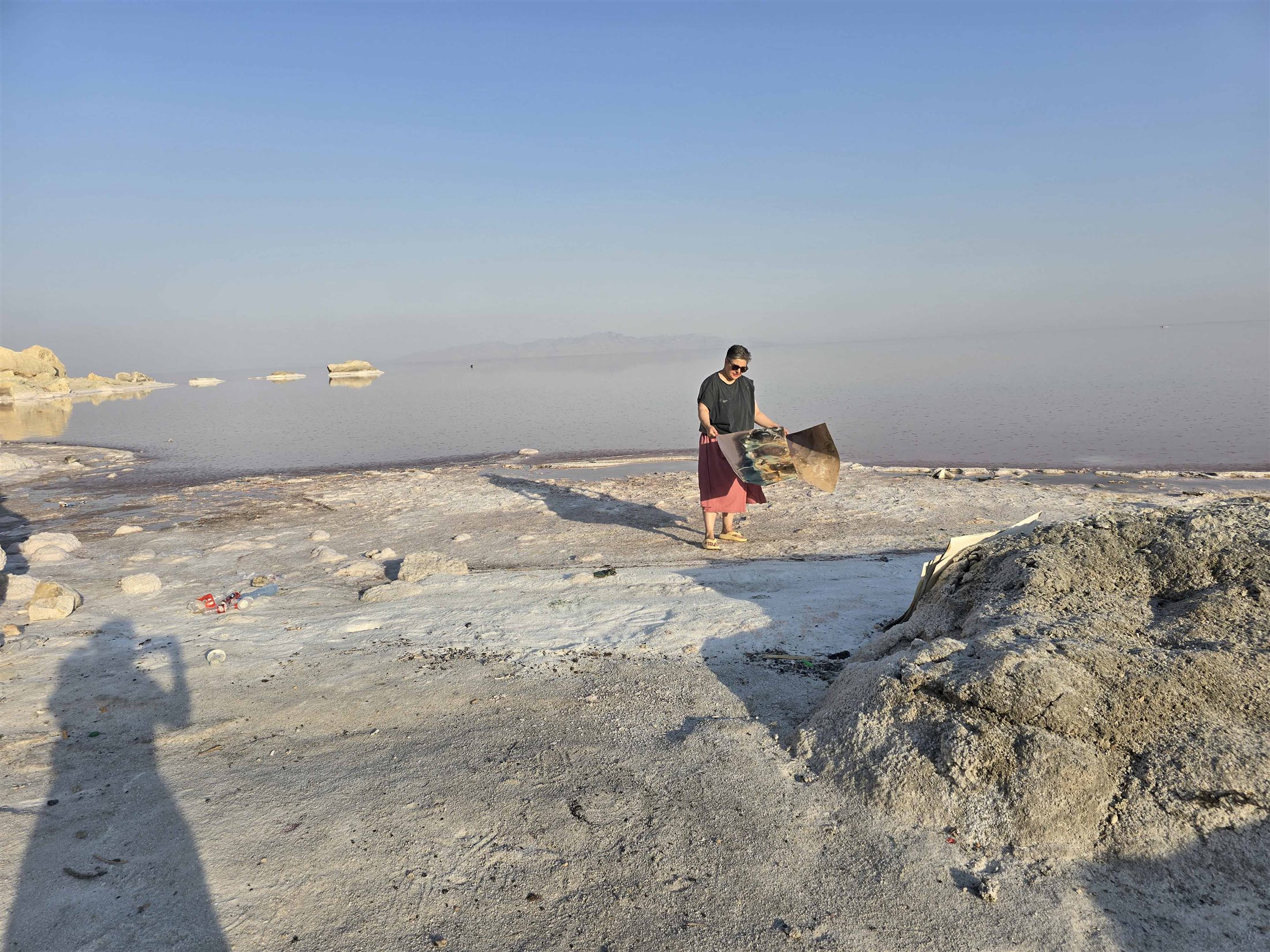

Can water itself carry the memory of a landscape? This question, which emerged through years of practice and research with cameraless photographic processes—particularly wet cyanotype and chemigram—in my studio, led me to an ongoing site-specific project in which different bodies of water across Iran become sites for image-making. Over time, I realized that what drew me to this project was the way the changing conditions of each location—its water chemistry, temperature, humidity, and other environmental factors—play a decisive role in the unpredictable formation of images on light-sensitive paper. In this body of work, water is simultaneously the subject, the material, and the agent of image formation. The image is not the record of a landscape but the outcome of an encounter between matter, environment, and time. What gradually appears on the paper is less a representation of a place than a trace of water's presence and activity—landscapes that resemble the memory of a place more than its depiction. Rather than using the camera to record water, I work in direct contact with it, creating the conditions in which the material itself participates in making the image. So far, the project has unfolded in five phases: the Caspian Sea (Noor Beach), Anzali Lagoon, a wild river in Gilan Province, Caspian Sea (Gisoom Beach) and Urmia Lake.