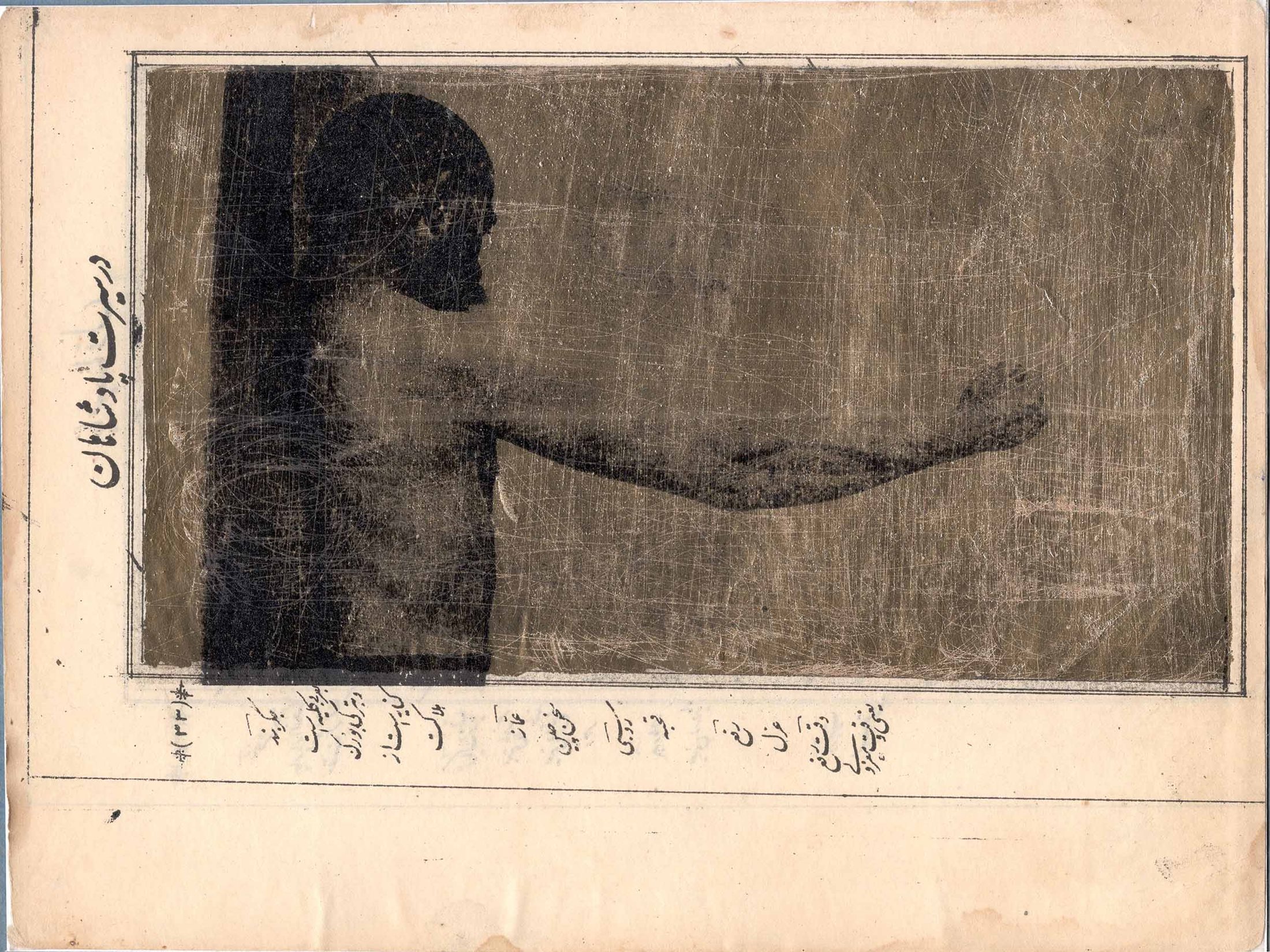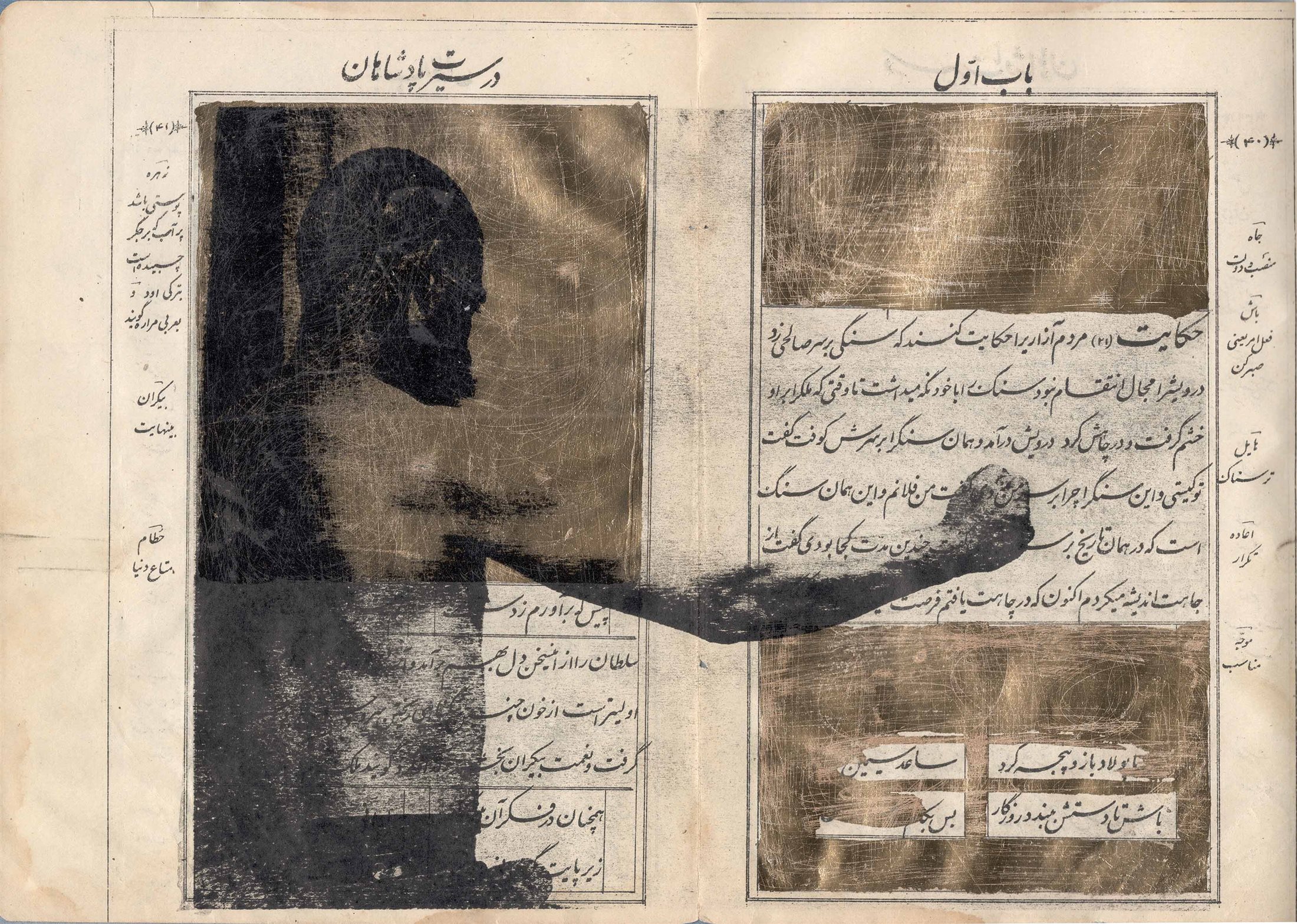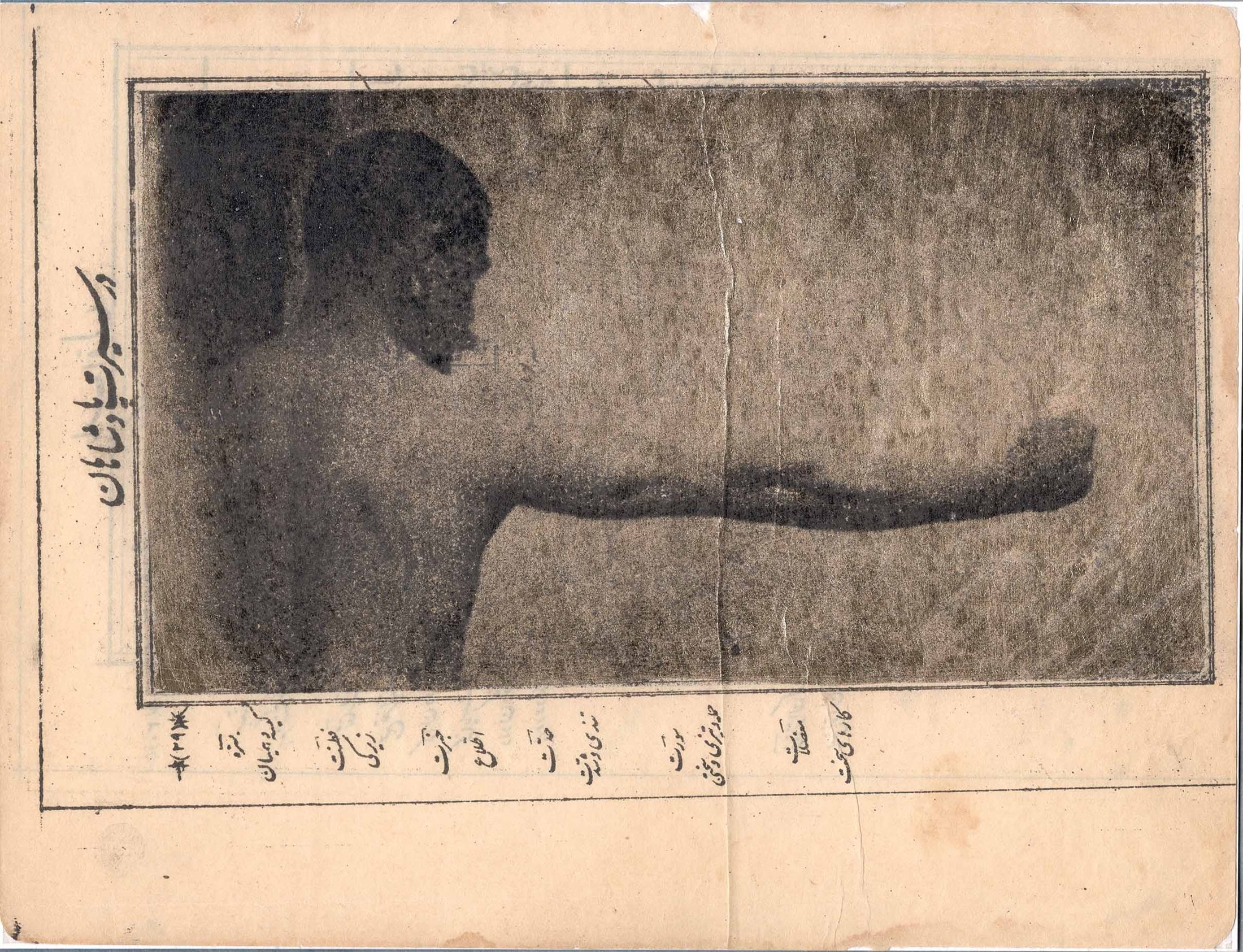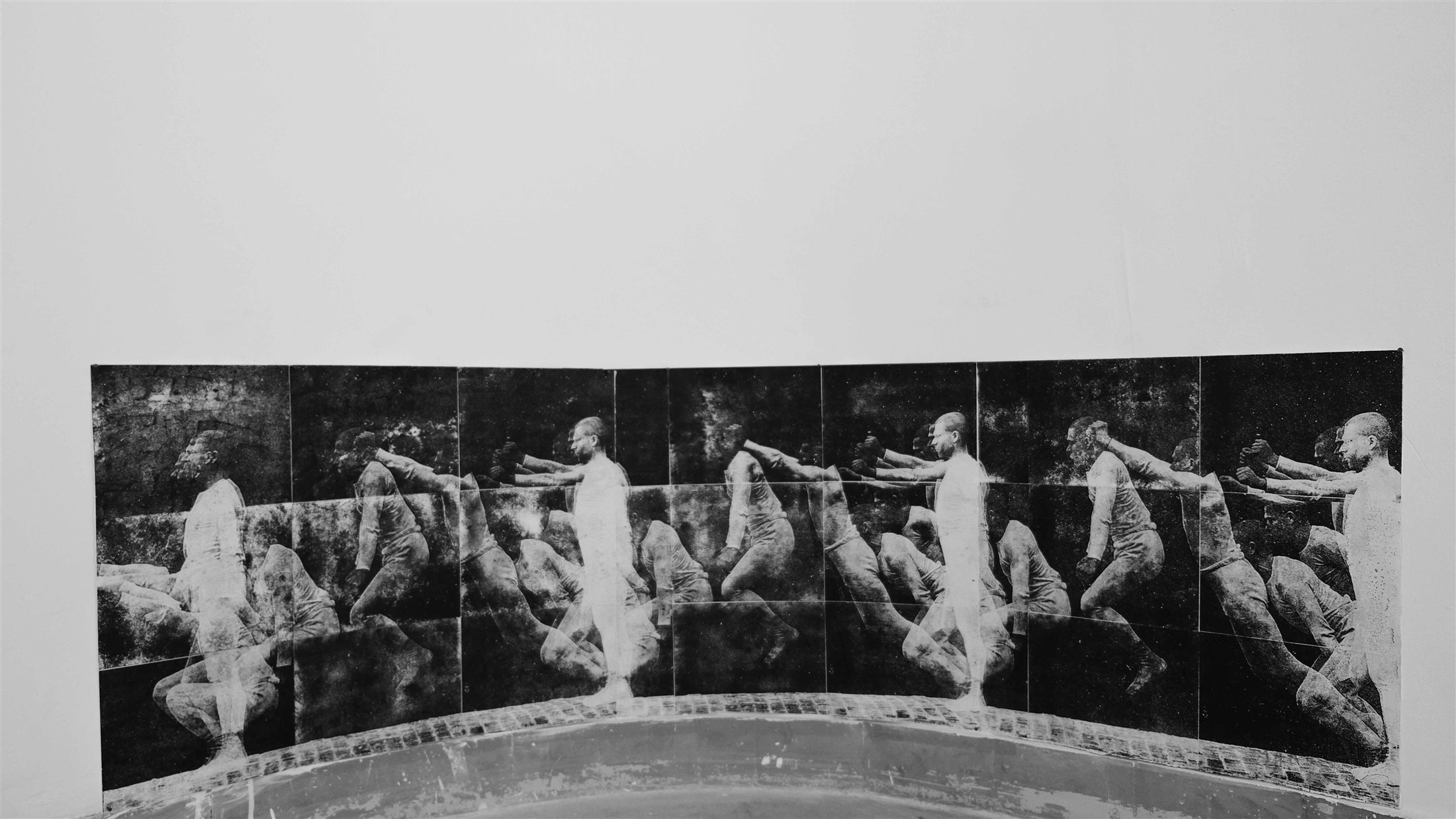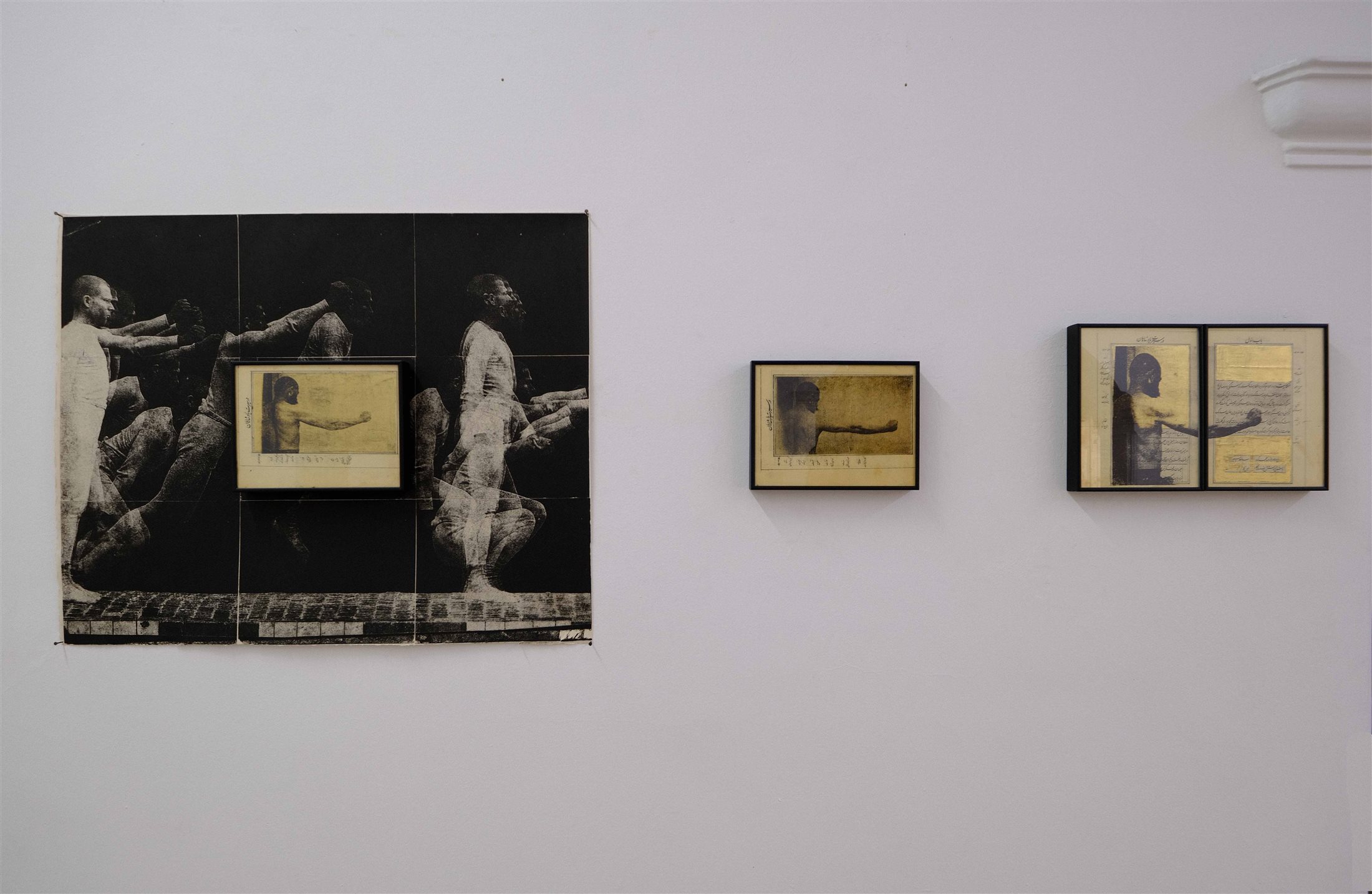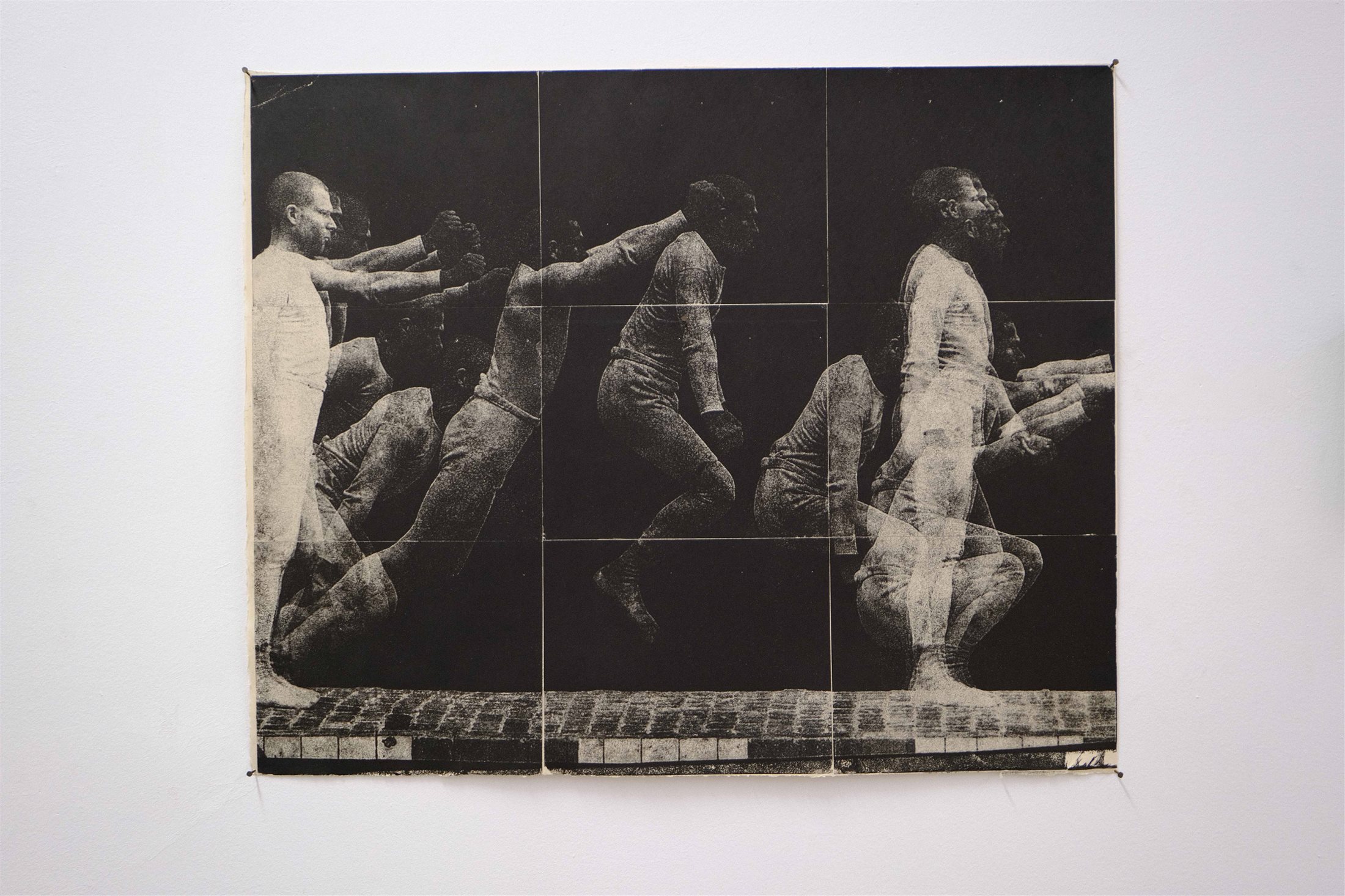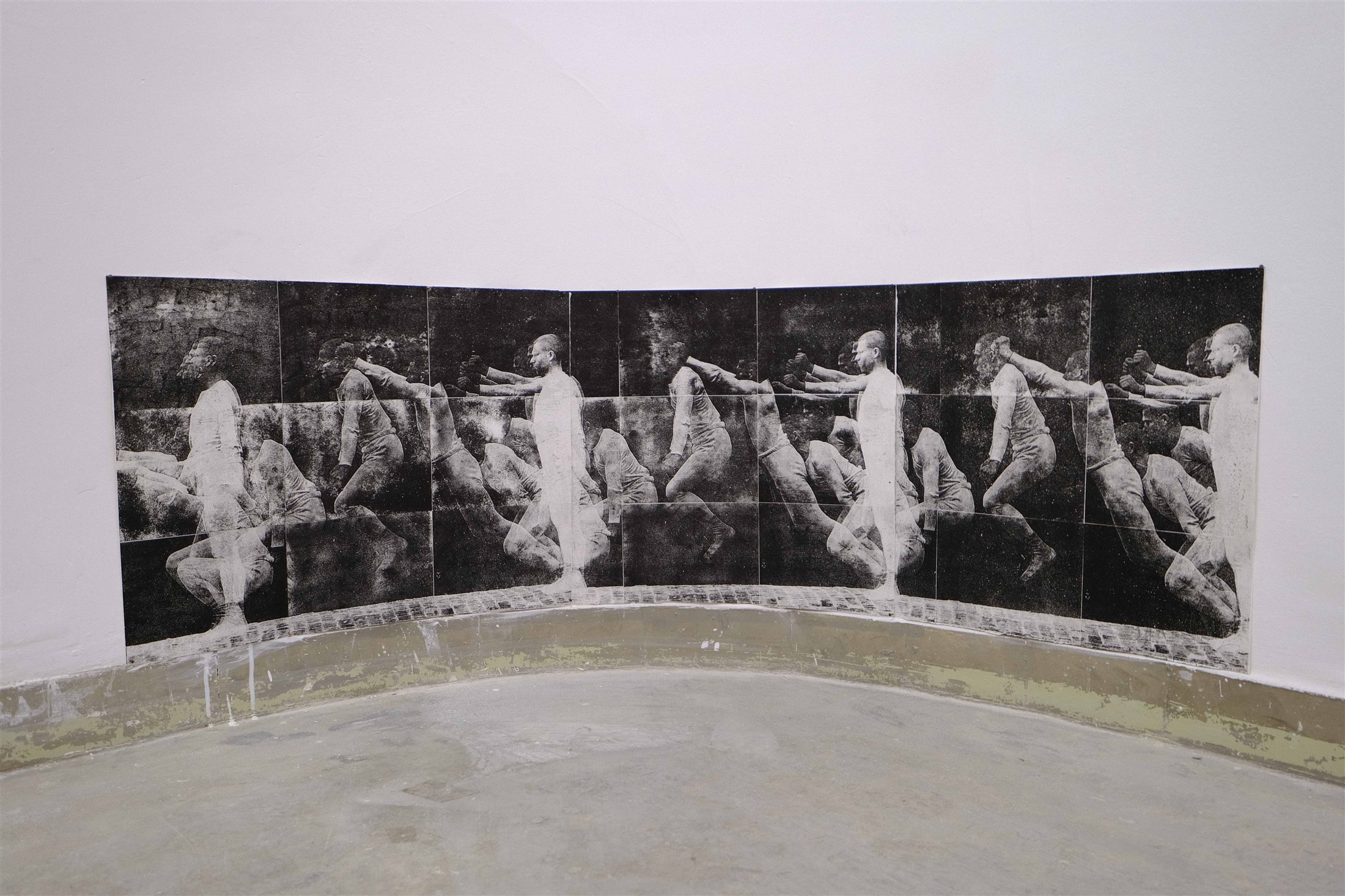

Étienne-Jules Marey, the French scientist and physiologist, was a pioneer in the study and recording of movement through photography. In this work, frames from his motion study of “punching” are detached from their original scientific context and placed over a lithographic edition of Saadi’s Bustan, Chapter One, “On the Conduct of Kings.” In the background lies another of Marey’s images, a motion study of “jumping.” I have looped these jumps, which unfold within a narrow span, to create an impression of continuity: the continuity of the effort to leap and break free of obstacles, and the continuity of despair.
The fist is a gesture that, in the history of the body, has carried the weight of power, violence, resistance, and the exertion of force. The sequence of Marey’s fists, laid over the pages of “On the Conduct of Kings,” sets this gesture before a text about power, a text that, through counsel and parable, warns the king against the sigh of the oppressed. I wanted one of these two systems of signs to prevail over the other, and to show how the “fist” takes over the realm of language and dialogue.
اتین ژول ماره (Étienne-Jules Marey)، دانشمند و فیزیولوژیست فرانسوی، از پیشگامان مطالعه و ثبت حرکت بهواسطهی عکاسی بود. در این کار، فریمهایی از مطالعهی حرکت «مشتزدن» او از زمینهی علمی اولیهی خود جدا شده و بر روی نسخهی چاپ سنگیِ بوستان سعدی، باب اول «در سیرت پادشاهان»، قرار گرفته است. در پسزمینه، تصویر دیگری از ماره، که مطالعه حرکتِ «پریدن» است، قرار گرفته. من این پریدنها را که در یک فاصله محدود انجام میشود، لوپ کردهام تا انگارهای از تداوم بسازم. تداوم تلاش برای جهیدن و خلاص شدن از موانع، و تداوم یأس.
مشت ژستی است که در تاریخ بدن، بارِ قدرت، خشونت، مقاومت و اعمال نیرو را با خود حمل کرده است و قرار گرفتن توالی مشتهای ماره بر روی اوراق «در سیرت پادشاهان»، این ژست را روبهروی متنی دربارهی قدرت مینشاند؛ متنی که با پند و حکایت، پادشاه را بر حذر میدارد از آهِ خلق. میخواستم یکی از این دو نظام نشانهای بر دیگری فائق شود و نشان بدهم که چطور «مُشت» عرصه زبان و گفتگو را تسخیر میکند.